

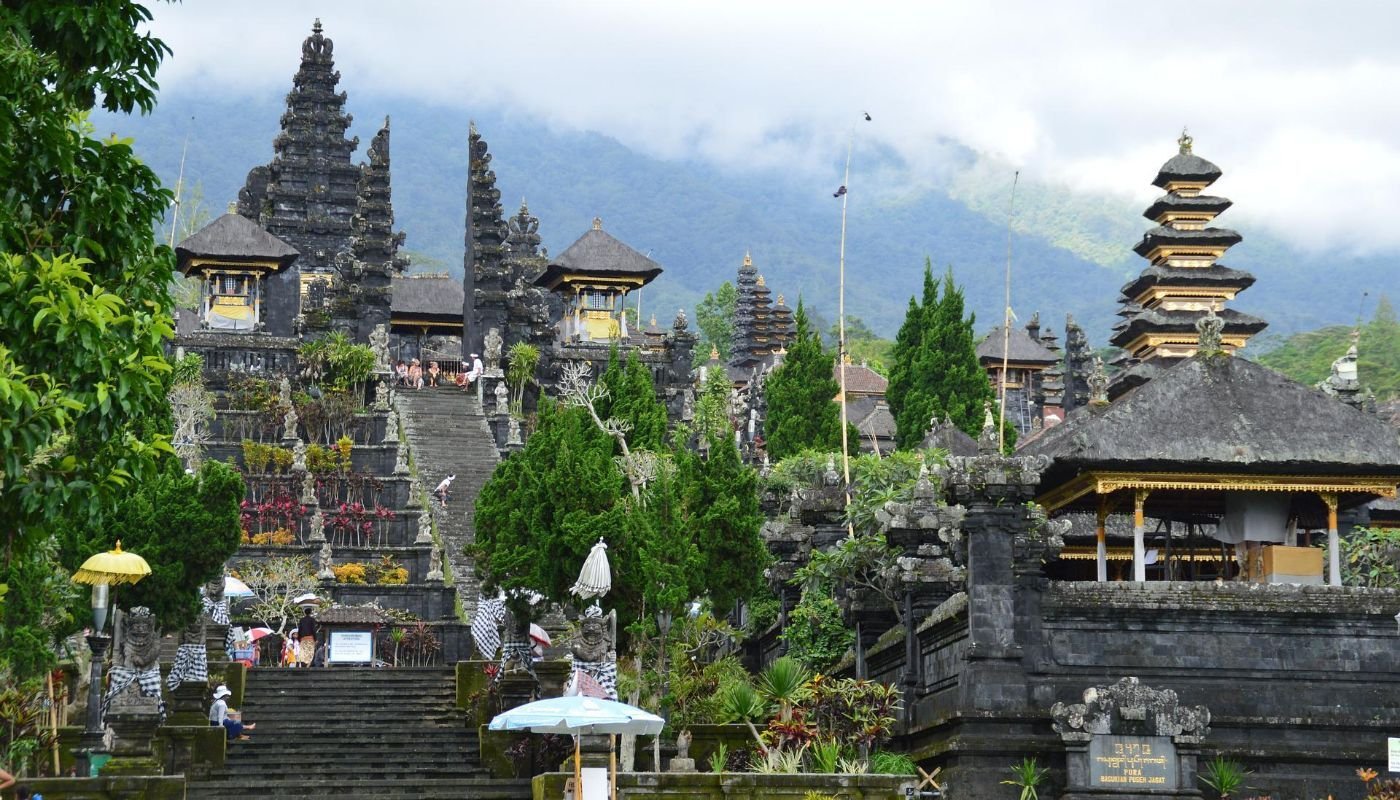
Besakih Temple (Pura Agung Besakih): the spiritual center and the oldest sanctuary of Bali Besakih Temple, or Pura Agung Besakih, is considered the main temple of Bali. It is located on the slope of Mount Agung, the highest and most sacred volcano on the island. Its elevated position (about 1,000 meters above sea level) symbolizes closeness to the gods and the spiritual realm. The temple is often called the “Mother of all temples” as it embodies the religious, cultural, and architectural essence of Bali.
Location and sacred symbolism
Besakih sits on the western slope of Mount Agung (Gunung Agung), which rises to 3,142 meters. This volcano is regarded as the most sacred point of the island and, according to local beliefs, the dwelling place of the gods. A legend even says that it is here where the “Axis of the World” lies — the very center around which the entire universe, including planets and stars, revolves.
Scale and grandeur
What was built here is not just a temple but an enormous temple complex that includes more than 86 religious structures. It is the largest complex in Bali, covering over 150,000 square meters, with around 30,000 m² open to visitors. The sheer grandeur of Besakih highlights its role as the island’s main religious center.
Ancient history
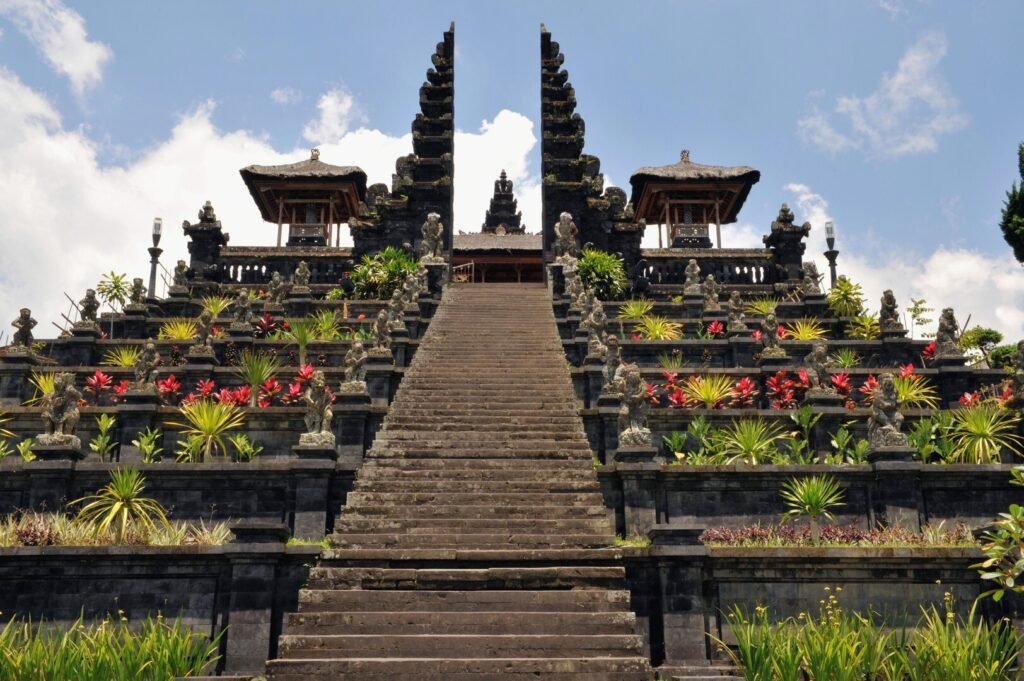
Besakih is not only the largest but also the oldest temple in Bali. Scholars have established that some elements, such as altars and stairways, were created more than 2,000 years ago. This indicates that the site of today’s Hindu complex was originally a pagan sanctuary, where locals worshiped ancestral spirits and offered them gifts. Thus, Besakih reflects the centuries-long evolution of Balinese spirituality — from indigenous beliefs to Hinduism.
A sacred place of the gods
The temple’s location on the slope of Mount Agung emphasizes its sacredness. Balinese people believe that the volcano serves as a bridge between the human world and the divine. Such a place could not host just an ordinary temple — it became the site of a vast complex worthy of the holy status of the volcano.
The main temple of Bali
Besakih symbolizes the spiritual unity of the island. Its grandeur, antiquity, and legendary connections make it the true heart of Balinese culture.
The history of Besakih Temple: antiquity, legends, and trials of time
Besakih Temple, or Pura Agung Besakih, holds a thousand-year-old history filled with legends, mystical events, and facts that highlight its spiritual and cultural significance for Bali.
Ancient roots and legends
The earliest written references to the temple date back to the early 11th century, though it already existed as a sacred site by then. The exact date of its foundation remains a mystery, with several theories:
- A wandering monk in the 8th century. According to legend, a monk established the temple here, inspired by the site’s sacred energy.
- Raja Kesari in the 10th century. Another version claims that the temple was founded by Raja Kesari, though he may only have expanded an older pagan shrine.
The age of some altars, dated at more than 2,000 years, indicates that a place of worship existed here long before the arrival of Hinduism. Most likely, the temple originally served as a site for sacrifices to ancestral spirits.
Expansion and royal patronage
Besakih Temple continuously expanded over the centuries. One of the main sanctuaries of the complex — Agung Penataran, dedicated to the god Shiva — was built in the 17th century. Balinese kings regularly allocated funds for the development and restoration of the temple, as confirmed by numerous chronicles.
From the 11th century onward, Besakih was scarcely mentioned in documents until the 15th century, when Bali’s political center shifted closer to the temple. At that time, it became a state sanctuary where major ceremonies were held and symbols of royal power were kept.
Rituals and sacred meaning
For centuries, Besakih served as a refuge for locals during natural disasters. Here, offerings were made to the gods to atone for sins and seek protection from calamities. Sacrifices included tigers, buffaloes, cows, and even black monkeys, which were considered especially powerful offerings.
One of the most significant events in the temple’s history is the Eka Dasa Rudra festival, held once every century. It is dedicated to spiritual purification and the harmonization of the world.
The 1963 eruption of Mount Agung
In the spring of 1963, the temple found itself at the center of events when Mount Agung became active. Priests warned of an impending disaster, linking it to the wrath of the gods, but the Eka Dasa Rudra festival still went ahead.
On March 18, 1963, the volcano erupted, releasing lava flows that destroyed villages and claimed more than 1,000 lives. Yet the Besakih Temple, located on the volcano’s slope, miraculously remained untouched. The lava flows bypassed it, which locals regard as a sign of divine favor. This event strengthened belief in the temple’s sacred status.
The role of the “Mother Temple”
Besakih is often called the “Mother Temple” for its profound importance to Balinese culture and religion. It not only serves as the island’s spiritual center but is also seen as a protector against natural disasters. Its antiquity, scale, and connection to the volcano make it not only a symbol of Hinduism in Bali but also a key element of the island’s cultural heritage.
Today, Besakih remains a major pilgrimage site and one of Bali’s most important landmarks, reflecting the island’s centuries-old history and spiritual traditions.

Tourist access
Although Besakih is open to all Hindus, tourists of other faiths are only allowed to enter the outer courtyards and may not step into the inner sanctuaries. Nevertheless, a walk through the temple, with its breathtaking views and rich architecture, usually takes several hours.
A place for meditation
The temple’s location on the slopes of Mount Agung, far from populated areas, makes it an ideal place for meditation. It is believed that Agung cleanses negative energy, and Balinese people traditionally orient their homes so that their heads point toward this sacred mountain while sleeping.
Pura Besakih, as a spiritual and architectural symbol, attracts not only pilgrims but also those seeking inspiration and unity with nature.
Besakih Temple is located here